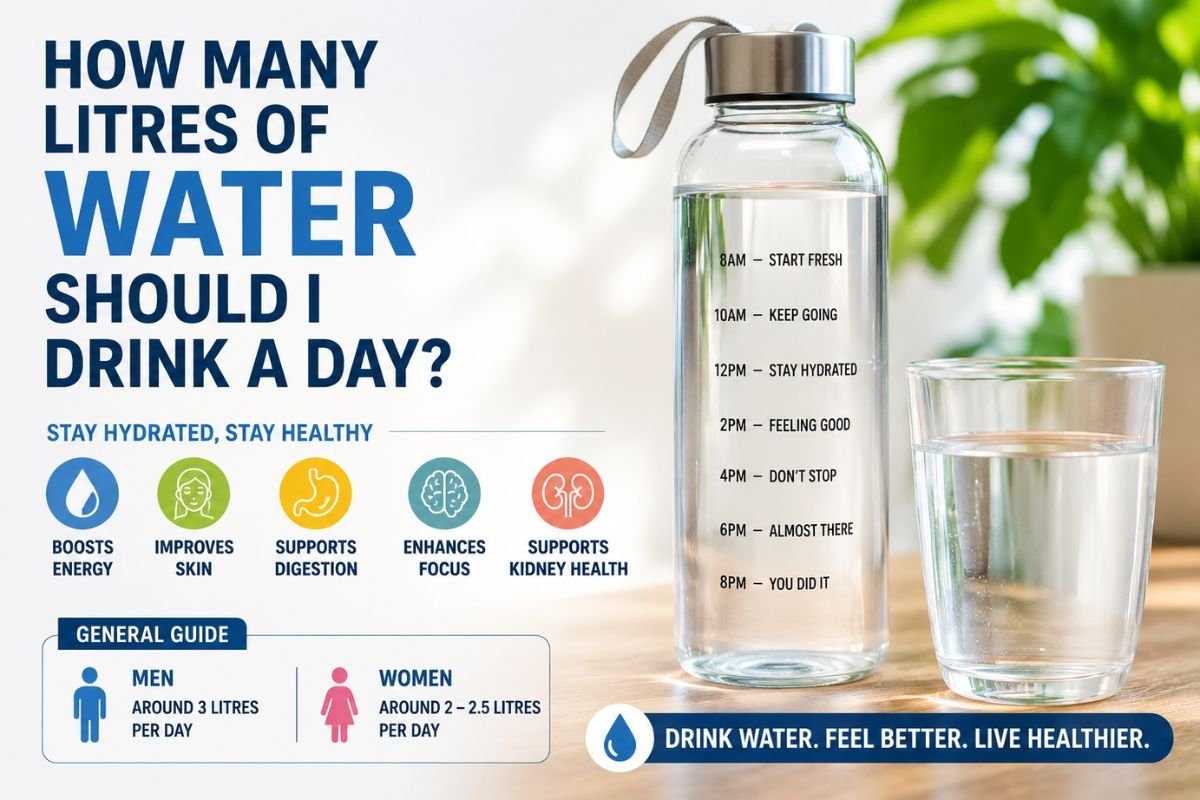
Water is one of the most essential elements for human health. Every cell, tissue, and organ in your body depends on water to function properly. Yet many people still wonder: How many litres of water should I drink a day?
The answer is not exactly the same for everyone. Your daily water needs depend on factors such as age, activity level, climate, and overall health. However, understanding proper hydration can help you maintain energy, support digestion, improve focus, and promote overall well-being.
Why Water Is Important for the Body
Water plays a crucial role in almost every function of the body. It helps regulate body temperature, transport nutrients, remove waste, and support healthy circulation.
Without enough water, the body can quickly become dehydrated, leading to fatigue, headaches, dizziness, and poor concentration.
Staying properly hydrated also supports healthy skin, muscle function, and joint movement.
General Recommendation for Daily Water Intake
A common recommendation for adults is to drink around 2 to 3 litres of water per day. This amount may vary depending on individual needs.
For Men
Men generally require slightly more water due to higher muscle mass and body size. Many health experts suggest around 3 litres daily for average adult men.
For Women
Women often need around 2 to 2.5 litres of water each day, depending on lifestyle and activity level.
For Children and Teenagers
Younger individuals also need proper hydration, although their water requirements are usually lower than adults.
Factors That Affect Water Needs
Not everyone needs the exact same amount of water. Several factors influence how much water your body requires daily.
Physical Activity
People who exercise regularly lose more fluids through sweat. Increased activity means your body needs additional water to stay hydrated.
Climate and Weather
Hot and humid environments can increase sweating and fluid loss. People living in warm climates may require more water throughout the day.
Diet and Nutrition
Foods with high water content, such as fruits and vegetables, contribute to hydration. On the other hand, salty or processed foods may increase water needs.
Health Conditions
Certain illnesses, medications, or medical conditions may affect hydration levels and require additional fluid intake.
Signs You May Not Be Drinking Enough Water
Your body often gives clear signals when it needs more water.
- Feeling Tired or Low on Energy: Dehydration can reduce blood circulation and oxygen delivery, leading to fatigue.
- Dry Mouth and Thirst: Thirst is one of the most obvious signs that your body needs hydration.
- Dark-Colored Urine: Urine color can indicate hydration status. Pale yellow is generally considered a sign of proper hydration.
- Headaches and Dizziness: Lack of water can affect brain function and cause discomfort.
Can You Drink Too Much Water?
While hydration is essential, excessive water intake is also not ideal. Drinking extremely large amounts of water in a short period can disrupt the balance of minerals in the body.
For most healthy individuals, this is uncommon, but it’s important to drink water steadily throughout the day rather than excessively at once.
Best Times to Drink Water
Building healthy hydration habits can improve your daily energy and overall health.
- After Waking Up: Drinking water in the morning helps rehydrate the body after several hours of sleep.
- Before and After Exercise: Physical activity increases fluid loss, making hydration important before and after workouts.
- During Meals: Moderate water intake during meals can support digestion.
- Throughout the Day: Instead of drinking large amounts at once, it’s better to sip water consistently during the day.
Tips to Stay Properly Hydrated
Many people struggle to drink enough water daily. Simple habits can make hydration easier and more consistent.
- Carry a Water Bottle: Having water nearby serves as a reminder to drink regularly.
- Add Natural Flavor: Adding lemon, cucumber, or mint can make water more refreshing.
- Eat Water-Rich Foods: Fruits like watermelon, oranges, and cucumbers contain high amounts of water.
- Set Daily Goals: Tracking your water intake can help you stay consistent.
The Connection Between Hydration and Energy
Water directly affects energy levels and physical performance. Even mild dehydration can make you feel tired and less focused.
Proper hydration supports blood circulation, nutrient delivery, and brain function, helping you stay active and alert throughout the day.
Water and Overall Health
Drinking enough water contributes to many aspects of health beyond hydration alone.
- Supports Digestion: Water helps break down food and supports healthy digestion.
- Promotes Healthy Skin: Proper hydration may help maintain skin elasticity and overall appearance.
- Helps Regulate Body Temperature: Water helps cool the body through sweating and normal bodily functions.
- Supports Kidney Function: Adequate hydration helps the kidneys remove waste effectively.
Common Myths About Drinking Water
There are many myths surrounding water intake.
“Everyone Must Drink Exactly 8 Glasses”: While this is a useful guideline, actual needs vary from person to person.
“Only Water Counts”: Foods and beverages with high water content also contribute to hydration.
“If You’re Not Thirsty, You’re Hydrated”: Some people may not feel thirsty even when mildly dehydrated, especially older adults.
Final Thoughts
So, how many litres of water should you drink a day? For most adults, around 2 to 3 litres daily is a reasonable guideline, but individual needs can vary based on lifestyle, climate, and health.
The best approach is to listen to your body, stay consistent with hydration, and build healthy habits throughout the day. Drinking enough water is one of the simplest yet most effective ways to support your energy, health, and overall well-being.
Resources