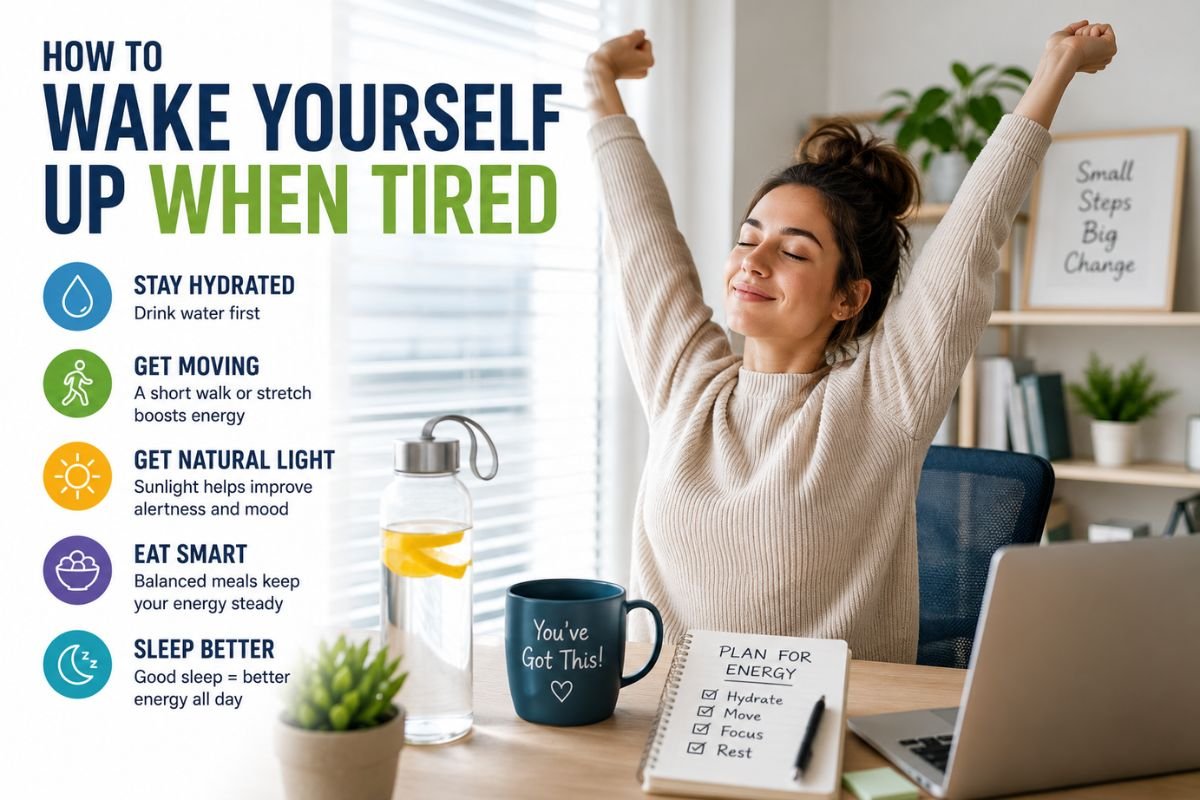
Feeling tired during the day is something almost every American experiences at some point. Whether it’s because of long work hours, poor sleep, stress, parenting responsibilities, or late-night screen time, low energy can make it difficult to stay productive and focused.
Many people immediately reach for coffee or energy drinks when exhaustion hits, but there are several healthier and more effective ways to wake yourself up naturally. Small lifestyle habits can make a major difference in how alert and energized you feel throughout the day.
If you’ve ever asked yourself, “How can I wake myself up when tired?” this guide covers practical strategies that fit real everyday life.
Start With Water
One of the simplest ways to feel more awake is to drink water. Mild dehydration can contribute to fatigue, headaches, and difficulty concentrating.
Many Americans wake up slightly dehydrated because the body goes several hours without fluids during sleep.
For example, Jessica, a 32-year-old office worker from Atlanta, noticed she often felt sluggish during morning meetings. After making it a habit to drink a large glass of water right after waking up, she felt more refreshed and focused before starting work.
Keeping a reusable water bottle nearby throughout the day can also help maintain hydration levels.
Get Moving
Physical movement increases blood circulation and can help the body feel more alert.
You do not necessarily need an intense workout. Even light movement may help improve energy temporarily.
Simple ideas include:
- Taking a short walk
- Stretching for five minutes
- Climbing stairs
- Doing light exercises at home
- Standing up regularly during work
For instance, Mike, a software developer from Seattle, started taking short walks during lunch breaks instead of sitting at his desk all day. He found that afternoon energy crashes became less severe.
Let Natural Light In
Sunlight helps regulate the body’s internal clock, also known as the circadian rhythm.
Exposure to natural light in the morning may help signal to your brain that it is time to feel awake and alert.
Many Americans spend most of the day indoors under artificial lighting, especially office workers and remote employees.
Opening curtains, stepping outside briefly, or sitting near a window can sometimes help improve alertness naturally.
Take Short Breaks From Screens
Long hours staring at screens can make mental fatigue feel worse.
People working on computers for extended periods often experience eye strain and reduced focus.
Short breaks every hour may help refresh the mind and improve concentration.
For example, Amanda, a college student from California, started using the “20-20-20 rule,” where every 20 minutes she looks at something 20 feet away for 20 seconds. She noticed less eye fatigue during long study sessions.
Eat Balanced Meals
Highly processed foods and sugary snacks may provide quick bursts of energy followed by crashes later.
Balanced meals containing protein, healthy fats, fiber, and complex carbohydrates can help support more stable energy levels.
Good snack options may include:
- Nuts and fruit
- Greek yogurt
- Peanut butter with apples
- Whole-grain toast with avocado
Skipping meals can also contribute to low energy and poor focus.
Use Caffeine Carefully
Coffee is a major part of American culture, and moderate caffeine intake may help improve alertness temporarily.
However, too much caffeine can sometimes lead to jitters, anxiety, or sleep problems later at night.
Timing matters too. Drinking large amounts of caffeine late in the afternoon may interfere with sleep quality, creating a cycle of ongoing fatigue.
For example, David, a sales representative from Chicago, realized his evening coffee habit was making it harder to fall asleep at night. Reducing late-day caffeine improved his energy the next morning.
Try a Power Nap
Short naps may help restore alertness when used properly.
Experts often recommend limiting naps to around 10–20 minutes to avoid waking up feeling groggy.
Power naps can be especially helpful for people with demanding schedules, shift work, or sleep deprivation.
However, frequent daytime exhaustion may also signal poor nighttime sleep habits.
Improve Sleep Quality
Sometimes the best solution for daytime fatigue is improving sleep itself.
Many Americans struggle with sleep because of:
- Stress
- Late-night phone use
- Irregular schedules
- Excess caffeine
- Long work hours
Healthy sleep habits may include:
- Going to bed consistently
- Reducing screen time before bed
- Keeping the bedroom cool and dark
- Limiting caffeine late in the day
Better sleep often leads to better energy naturally.
Fresh Air Can Help
Stepping outside for a few minutes may help refresh the body and mind.
Fresh air combined with movement and sunlight can sometimes improve alertness surprisingly quickly.
Even brief outdoor breaks during work hours may help reduce mental fatigue.
Listen to Music or Change Your Environment
Music can stimulate the brain and improve mood for many people.
Changing your environment slightly, such as cleaning your workspace, standing instead of sitting, or moving to a brighter area, may also help reset focus and energy.
When Fatigue May Be a Bigger Issue
Occasional tiredness is normal, but ongoing extreme fatigue may sometimes be linked to deeper health or lifestyle concerns.
If someone constantly feels exhausted despite proper sleep and healthy habits, it may be worth discussing symptoms with a healthcare professional.
Final Thoughts
Learning how to wake yourself up when tired often comes down to small daily habits rather than quick fixes. Hydration, movement, sunlight, balanced meals, and better sleep can all play an important role in supporting healthy energy levels.
For many Americans living busy and stressful lives, simple changes like taking breaks, improving hydration, and getting more consistent sleep can make a noticeable difference over time. Sustainable energy usually starts with taking better care of the body overall.
References
- Mayo Clinic – Self-Care Tips to Fight Fatigue
Covers common causes of tiredness and practical lifestyle habits that may help improve energy levels. - Cleveland Clinic – Why Am I Always Tired?
Explains how sleep, hydration, stress, and daily routines can affect energy and alertness. - Harvard Health Publishing – Secrets to Better Sleep
Discusses healthy sleep habits that support better daytime energy and focus. - Centers for Disease Control and Prevention (CDC) – Sleep and Sleep Disorders
Provides information about healthy sleep routines and the importance of rest for overall wellness. - National Sleep Foundation
Offers expert guidance on sleep quality, fatigue, and maintaining healthy daily energy levels. - Johns Hopkins Medicine – The Benefits of Exercise for Energy
Reviews how physical activity and movement can support alertness, mood, and better sleep quality.